
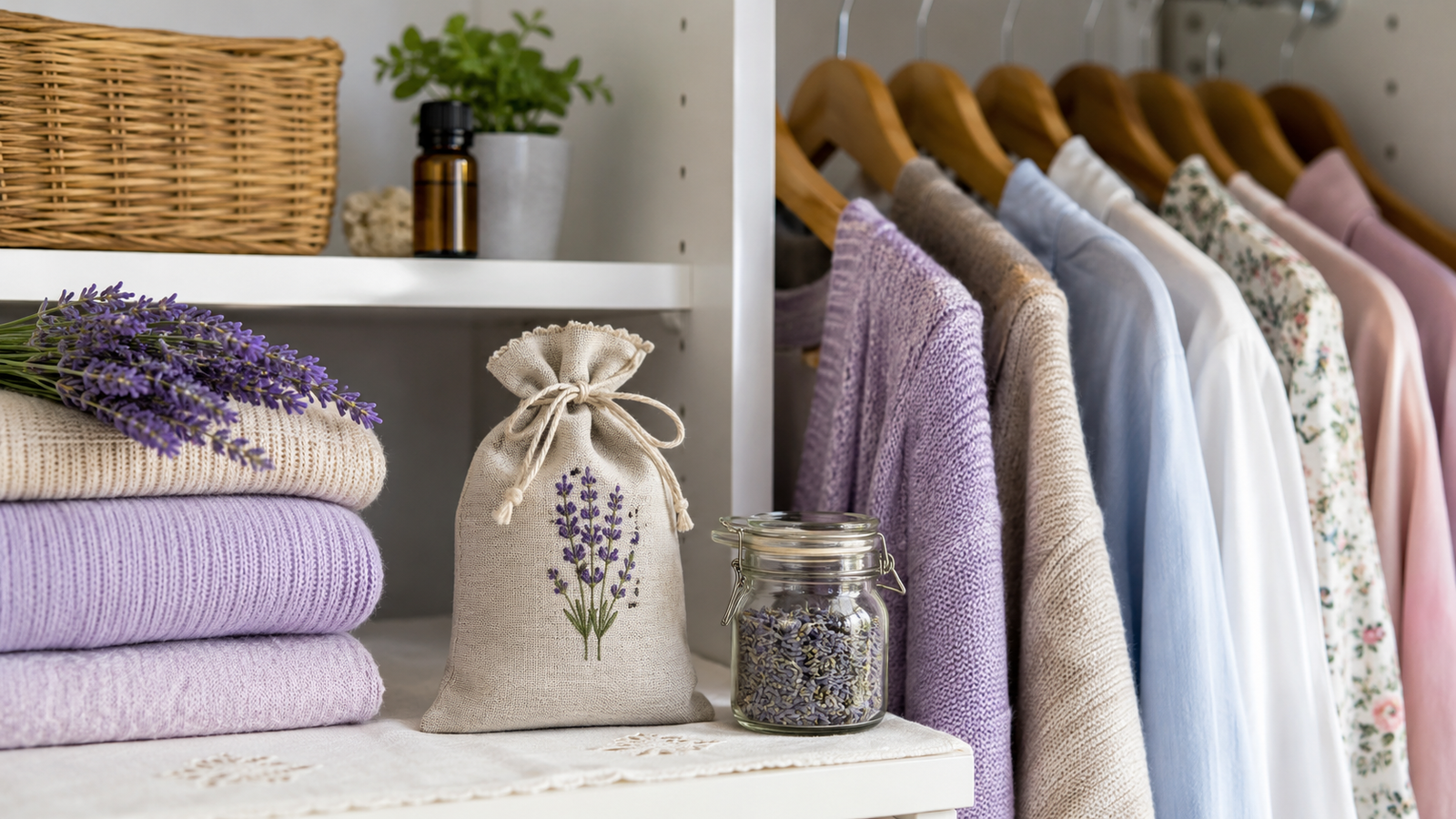
Opening a wardrobe and being greeted by a clean, pleasant scent can make clothes feel fresher and the entire room more inviting. Unfortunately, wardrobes are enclosed spaces where stale air, humidity, shoes, fabrics, and occasionally damp clothing can create unwanted odors. This is where natural wardrobe fresheners can be useful.
Instead of relying only on heavily perfumed sprays or synthetic fragrances, many people prefer simple ingredients such as dried lavender, cedarwood, baking soda, citrus peels, herbs, and essential oils. These options can help create a pleasant wardrobe environment while keeping the fragrance subtle.
The best natural wardrobe freshener is not necessarily the strongest-smelling one. A good solution should address the source of unpleasant odors, work well in a small enclosed space, and be safe for the fabrics stored nearby.
What Are Natural Wardrobe Fresheners?
Natural wardrobe fresheners are products or homemade solutions that use naturally derived ingredients to improve the smell inside wardrobes, closets, drawers, and clothing storage areas.
They may work in different ways. Some ingredients provide fragrance, while others help absorb unwanted odors or moisture. For example, lavender sachets release a floral aroma, whereas baking soda is mainly useful for absorbing odors.
Popular natural options include:
- Dried lavender
- Cedarwood
- Baking soda
- Activated charcoal
- Dried herbs
- Essential oils
- Dried citrus peels
- Coffee grounds
- Scented wooden blocks
Choosing between these options depends on whether your main goal is adding fragrance, controlling stale odors, or dealing with excess moisture.
Why Do Wardrobes Develop Unpleasant Smells?
Before adding a freshener, it is important to understand why a wardrobe smells stale in the first place. Covering an existing odor with fragrance may provide temporary improvement, but it does not solve the underlying problem.
Poor ventilation is one of the most common causes. Because wardrobe doors remain closed for long periods, air circulation is limited. Humidity can also become trapped inside, particularly in warm or damp environments.
Clothes that are stored before they are completely dry may contribute to musty smells. Shoes, jackets, towels, bedding, and clothing that has already been worn can introduce additional odors.
Dust and an overcrowded wardrobe can make matters worse. When clothes are packed too tightly together, air cannot circulate properly.
For lasting freshness, therefore, natural wardrobe fresheners should be combined with regular cleaning and good storage habits.
1. Dried Lavender Sachets
Lavender is one of the most traditional natural wardrobe fresheners. Its recognizable floral scent works particularly well in bedrooms, wardrobes, linen cupboards, and drawers.
A simple lavender sachet can be made by placing dried lavender flowers inside a small breathable cotton or muslin bag. The sachet can then be hung from the wardrobe rail or placed between folded clothing.
Avoid placing loose dried flowers directly against valuable or light-colored fabrics. Keeping the lavender inside a breathable pouch makes the freshener cleaner and easier to replace.
When the fragrance begins to weaken, gently squeezing the sachet can sometimes release more of its natural aroma.
2. Cedarwood Blocks
Cedarwood is another popular choice for wardrobes. Unlike floral fresheners, cedar provides a warm, woody fragrance that is usually mild and long-lasting.
Cedar blocks, rings, balls, or hangers can be placed throughout a wardrobe. They are especially convenient because they do not require liquids that could accidentally spill onto clothing.
Over time, cedarwood may lose some of its aroma. Lightly sanding an unfinished cedar block can expose fresh wood and help restore its characteristic scent.
Cedar is an excellent choice for people who prefer an earthy fragrance rather than something sweet or floral.
3. Baking Soda for Odor Control
Not every wardrobe needs additional perfume. Sometimes the better approach is simply removing stale odors.
Baking soda is inexpensive and widely used as a household deodorizer. A small open container of baking soda can be positioned securely on a wardrobe shelf where it cannot spill.
For a lightly scented version, a few drops of a preferred essential oil can be mixed into the baking soda.
Remember that baking soda should remain separate from clothing. Use a stable container, especially in wardrobes that are opened frequently or contain items that could knock it over.
Replace the baking soda periodically to maintain its usefulness.
4. Activated Charcoal Bags
Activated charcoal is another option for wardrobes where odor absorption is more important than fragrance.
Charcoal bags generally have little or no perfume of their own. Instead, they are commonly used to help manage unwanted smells in enclosed spaces. This makes them suitable for people who dislike strong fragrances.
Small charcoal pouches can be hung from rails or placed on shelves. They are particularly convenient near shoes, sportswear storage areas, or other sections where odors tend to develop.
Always follow the care and replacement instructions supplied with reusable charcoal products.
5. Essential Oil Wardrobe Fresheners
Essential oils allow you to customize the fragrance of your wardrobe. Lavender, lemon, orange, eucalyptus, peppermint, and cedarwood are popular choices.
One simple method is to add a small amount of essential oil to an absorbent material such as a cotton ball or unfinished wooden piece. Place it in a small dish or breathable pouch away from direct contact with clothing.
This separation is important because concentrated essential oils can stain or damage some fabrics and surfaces.
Start with only a few drops. A wardrobe is a small enclosed space, so a little fragrance can go a long way.
6. Dried Citrus Peels
Orange, lemon, and other citrus peels can provide a bright, refreshing aroma.
The key is making sure the peel is completely dried before placing it in a wardrobe. Fresh or partially dried fruit peel contains moisture and may spoil, which would create exactly the type of problem you are trying to prevent.
Fully dried citrus peel can be combined with cinnamon sticks, cloves, or dried herbs and placed inside a breathable sachet.
These combinations can create a pleasant homemade wardrobe freshener without requiring artificial perfume.
7. Dried Herbs and Homemade Sachets
Lavender is not the only herb suitable for scented sachets. Dried rosemary, mint, thyme, and other aromatic plants can also be experimented with.
A simple homemade mixture might combine dried lavender with rosemary, while another could use dried citrus peel with cloves.
Homemade sachets are especially useful because you can control how strong the fragrance becomes. If the scent is too powerful, use fewer aromatic ingredients. If it is too weak, refresh or replace the mixture.
Make sure all botanical ingredients are properly dried before storage.
8. Coffee as a Wardrobe Deodorizer
Coffee has a strong aroma and is sometimes used around the home to help mask or absorb unwanted smells.
If you want to experiment with coffee in a wardrobe, dry coffee grounds thoroughly before use and keep them securely contained. A safer option is placing dry coffee in a breathable pouch or stable container where it cannot come into contact with clothes.
Coffee’s distinctive scent will not appeal to everyone, but it may work well in shoe cupboards or storage areas where a floral fragrance feels inappropriate.
How to Make a Simple Natural Wardrobe Freshener
One of the easiest DIY options is a dried lavender and cedar sachet.
You will need dried lavender, small cedar pieces or chips suitable for this purpose, and a breathable fabric pouch. Fill the pouch loosely rather than packing it tightly. Tie it securely and hang it inside the wardrobe.
Another easy option is a scented baking soda container. Place baking soda in a small jar, add a few drops of essential oil, mix gently, and use a breathable cover rather than sealing the container completely.
Keep homemade fresheners away from children, pets, delicate fabrics, and anything that could be damaged by spills.
How to Keep a Wardrobe Naturally Fresh
A freshener works best when the wardrobe itself is clean.
Take clothes out periodically and wipe shelves and interior surfaces. Allow everything to dry completely before returning your belongings. Vacuum or clean the floor of larger wardrobes, particularly around corners where dust accumulates.
Never store damp clothing. Laundry should be fully dry before it goes into drawers or wardrobes.
Avoid packing clothes too tightly together. Leaving a little space between hanging garments encourages airflow and makes it easier to find what you need.
Shoes can also be a major source of wardrobe odor. If possible, keep frequently worn shoes in a separate ventilated area or make sure they are dry and clean before storing them.
Opening wardrobe doors occasionally can also improve ventilation.
Natural Wardrobe Fresheners for Different Needs
Different ingredients suit different situations. For a soft bedroom fragrance, dried lavender is a simple choice. For a woody and less floral aroma, cedarwood works well.
When unwanted smells are the main concern, baking soda or activated charcoal may be more appropriate because they focus more on odor control than perfume.
For customizable fragrance, essential oils offer plenty of possibilities. Citrus and herbal sachets are useful for people who enjoy making their own home fresheners.
You can also combine methods. For example, use an odor absorber on the bottom shelf and a mild lavender sachet near hanging clothes.
Important Mistakes to Avoid
One common mistake is using too much fragrance. Strong scents can transfer to clothing and become overwhelming, especially inside a small wardrobe.
Another problem is allowing oils, herbs, coffee, or other freshening materials to touch clothes directly. Use containers or breathable bags to prevent staining and mess.
Never put wet herbs, flowers, or fresh citrus peel into an enclosed wardrobe. Added moisture can encourage unpleasant odors rather than eliminate them.
Most importantly, investigate persistent musty smells. If you notice visible mold, ongoing dampness, water damage, or an odor that repeatedly returns after cleaning, a scented freshener is not the solution. The moisture source needs to be identified and addressed.
How Often Should Natural Wardrobe Fresheners Be Replaced?
There is no universal replacement schedule because natural materials vary considerably.
A lavender sachet can simply be refreshed or replaced when its aroma becomes too weak. Essential-oil fresheners can be renewed with a small amount of oil when needed. Baking soda should be replaced periodically rather than left indefinitely.
Cedar products can last considerably longer and may sometimes be refreshed by lightly sanding unfinished wood.
Instead of trying to maintain an extremely strong fragrance, aim for a wardrobe that smells neutral, clean, and subtly fresh.
Are Natural Wardrobe Fresheners Better Than Artificial Sprays?
Both approaches have advantages, but natural wardrobe fresheners are appealing because they can be simple, inexpensive, and customizable.
They also allow you to separate odor control from fragrance. You might use charcoal to manage smells while adding a small lavender sachet purely for aroma.
Artificial sprays can provide immediate fragrance, but repeatedly spraying perfume into a wardrobe may simply cover an underlying problem. Some sprays can also leave residue on nearby surfaces or fabrics if used incorrectly.
Whatever method you choose, cleaning and moisture control should remain the foundation of wardrobe freshness.
Final Thoughts
Natural wardrobe fresheners provide a simple way to make closets, drawers, and clothing storage spaces feel cleaner and more pleasant. Lavender sachets offer a classic floral scent, cedarwood provides a warm woody aroma, while baking soda and activated charcoal are useful when odor control is the priority.
Essential oils, dried herbs, citrus peel, and other homemade combinations make it easy to customize the fragrance to suit your home. However, fresheners work best when combined with good wardrobe habits.
Keep clothing completely dry, avoid overcrowding, clean shelves regularly, improve ventilation when possible, and investigate persistent damp or musty odors. With these basic habits and the right natural wardrobe freshener, your wardrobe can stay pleasantly fresh without needing an overpowering artificial fragrance.