
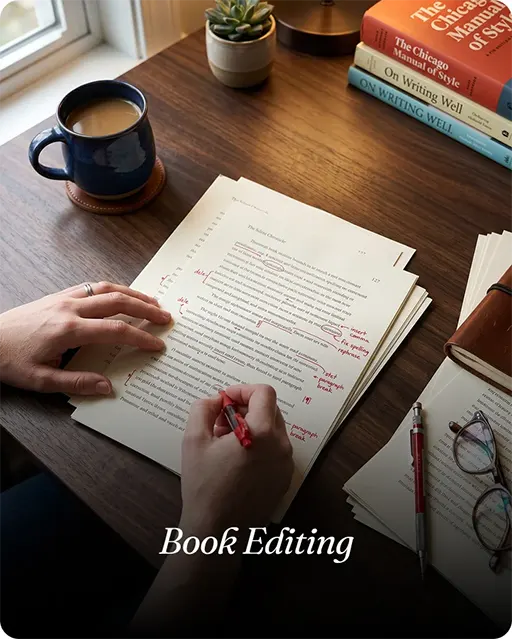
Finishing a manuscript is a big moment. You have spent months, maybe years, shaping your ideas into a full book. It is natural to want to share it with the world straight away. Yet the gap between a finished draft and a book that readers love is wider than most new authors expect. That gap is filled by book editing.
Every book that earns respect on a shelf or a screen has been through careful editorial hands. In the UK, readers, agents and reviewers all notice quality quickly. A weak opening chapter, uneven pacing or a handful of typos can end a reader’s interest before the story begins. This guide explains why the editing stage matters before book publishing, what each stage does, and how you can get your manuscript ready with confidence.
The UK Book Market Is Busier Than Ever
Book publishing in the UK has become far more crowded. The number of books competing for attention has grown sharply. Industry figures reported in 2026 show that self-published title output rose by 43.5% between 2022 and 2025, while traditional output grew by about 10%. Total book output passed four million titles in 2025.
Readers also have more choice than ever. With digital shelves, free samples and instant reviews, a reader can judge your book within minutes. That raises the standard every author must meet.
For UK authors, this means one thing. Your book is not just up against other debut writers. It sits beside thousands of polished titles from established publishers, all fighting for the same reader’s time.
Getting a deal is just as demanding. Most major UK publishers only take submissions through literary agents, although some smaller presses accept work directly from authors. Agents and acquiring editors read a great many submissions, and they tend to decide quickly. A clean, well-structured manuscript shows that you take your craft seriously, and it gives your story the best chance of being read to the end.
What Editing Actually Involves
Many authors use the word editing to describe a single task, but book editing is really a series of stages. Each stage looks at a different layer of your manuscript, and each one matters. Skipping a stage usually leaves a gap that readers will notice.
Developmental Editing
This is the big-picture review. A developmental editor looks at structure, plot, character arcs, pacing and argument. For non-fiction, they check whether your ideas build logically and whether the reader is guided from one chapter to the next. For fiction, they test whether the story holds together and whether the characters feel real. Expect honest feedback about what works and what needs rethinking.
Line Editing and Copyediting
Once the structure is sound, the focus moves to the sentences themselves. Line editing improves clarity, rhythm and voice. Copyediting corrects grammar, spelling, punctuation and consistency, such as how a character’s name or a key term is written throughout. In the UK, this also includes keeping to British spelling and style so the book reads naturally for its audience.
Proofreading
Proofreading is the final polish. It catches the typos, formatting slips and small errors that survive earlier rounds. It should always happen after the manuscript is laid out, so that the proofreader sees the book exactly as the reader will.
The table below sums up the stages.
| Editing stage | What it checks | Best time to use it |
| Developmental editing | Structure, plot, pacing, argument | After the first or second full draft |
| Line editing | Style, clarity, flow, voice | Once the structure is settled |
| Copyediting | Grammar, spelling, consistency | Before the book is laid out |
| Proofreading | Typos, formatting, final errors | After layout, before release |
Editing for Different Types of Books
Different books need different kinds of attention. The stages above stay the same, but the focus shifts depending on what you have written.
Fiction
Fiction editors pay close attention to plot logic, pacing, point of view and dialogue. They watch for continuity slips, such as a character’s eye colour changing between chapters, and for scenes that slow the story down. The aim is to keep the reader turning pages.
Non-Fiction and Memoir
Non-fiction editors focus on clarity, structure and credibility. They check that claims are supported, that chapters build in a sensible order and that the tone suits the reader. Memoir needs an extra layer of care, because personal stories must feel honest and focused rather than a list of events.
Children’s and Academic Writing
Children’s books call for age-appropriate language and tight, rhythmic text. Academic and professional titles need consistent referencing, precise terminology, and a clear argument. In every case, a specialist eye makes the difference.
How Editing Shapes the Reading Experience
Most readers cannot explain why a book feels good, but they know when it does. Behind that feeling are dozens of small choices that an editor helps you make. Here is what a careful edit brings to the page:
- Flow. Sentences connect smoothly, so readers glide through chapters without stumbling.
- Consistency. Names, dates, facts, and style choices stay the same from the first page to the last.
- Focus. Every chapter earns its place, and anything that distracts from the main purpose is trimmed or reworked.
- Voice. Your personality comes through clearly, without clutter getting in the way.
- Accessibility. Plain, direct language makes the book easier for a wide audience to enjoy.
These qualities rarely appear by accident. They come from careful, patient work by someone who can see your book as a reader would.
Five Ways Book Editing Protects Your Book Publishing Journey
Good editing does more than fix mistakes. It shapes how your book is received at every step.
It Strengthens Your First Impression
Readers decide fast. The opening pages, the sample on a retail page and the first chapter sent to an agent all act as your shop window. Clean prose and a confident structure show that the book is worth the reader’s time.
It Builds Credibility With Readers and Reviewers
Reviewers and readers often mention errors in their feedback. A few visible mistakes can overshadow a strong idea and lead to low ratings. A professionally edited book signals that you respect your audience, and that trust encourages recommendations.
It Improves Your Chances With Agents and Publishers
A tidy manuscript removes easy reasons for rejection. When the writing is clear and the structure works, the person reading your submission can focus on the story or the idea rather than the errors. That is a real advantage in a competitive market.
It Helps You Self-Publish With Confidence
Authors who take the independent route carry every responsibility themselves, so no one else will catch the problems. Careful book editing gives your self-published title the same standard of finish as a traditionally published one, which helps it sit comfortably beside them in online stores and libraries.
It Saves Time and Frustration Later
Fixing problems after a book is live is slow and stressful. You may need to correct files, upload new versions and answer unhappy readers. Doing the work properly before release avoids that cycle and lets you spend your energy on launching and promoting the book.
Common Mistakes Authors Make Before Book Publishing
Skipping professional editing is among the most common mistakes new authors make. It is not the only one, though. Here are the pitfalls that appear most often.
- Editing too early. Sending a draft to an editor before you have revised it yourself wastes the editor’s time and your own. Do a full self-edit first.
- Relying only on spellcheck. Software catches obvious slips, but it cannot judge pacing, tone, or logic. It also misses words that are spelt correctly but used wrongly.
- Asking only friends and family. Loved ones are kind, but they are rarely trained to spot structural problems or inconsistencies.
- Leaving editing until the last minute. A thorough edit takes time. Build weeks, not days, into your schedule.
- Ignoring feedback. Editors see your book with fresh eyes. Treat their notes as a conversation, not an attack.
- Skipping the final read. Even after editing, read the finished layout once more before release.
How to Prepare Your Manuscript for an Editor
A little preparation helps your editor do their best work and makes the process smoother for you.
- Rest the draft. Set it aside for a couple of weeks, then reread it with fresh eyes.
- Revise it yourself. Cut repetition, tighten weak scenes, and fix obvious errors first.
- Write a short brief. Tell the editor who the book is for, what you want it to achieve, and where you feel unsure.
- Keep the file clean. Use consistent formatting, simple styles, and clear chapter breaks.
- Be ready to rewrite. Good editing often leads to new passages, so leave time to respond.
A Simple Timeline From Draft to Release
Knowing the order of events helps you plan with confidence. A typical path looks like this:
- Finish your first draft and rest it.
- Revise on your own and gather beta reader feedback.
- Book a developmental edit and rework the manuscript.
- Complete line editing and copyediting.
- Approve the layout and cover design.
- Proofread the final pages.
- Prepare your launch and release.
Allow breathing space between each step. Rushing the process is the surest way to let errors through.
Choosing the Right Editorial Support
Not every author has the time or training to work through all of these stages alone. A trusted team can guide you from the first manuscript review to release day. At UK Publishing House, authors can explore professional book editing support that covers the stages above, and learn more about the wider book publishing process.
When you look for support, check that the editor understands the UK book publishing market, offers a clear process and is open about what each stage will deliver. Ask for a sample edit where possible, and make sure you feel comfortable with their communication style.
Questions Worth Asking
Before you choose an editor or team, consider asking:
- Which genres and formats do you work with most?
- How do you handle feedback and revisions?
- What will I receive at the end of each stage?
- How will we communicate during the process?
- What is the expected timeline for my manuscript?
Final Thoughts
Book editing is not an afterthought. It is the bridge between a finished draft and a book that is ready for readers. It sharpens your message, protects your reputation and gives your work the best chance in a crowded market. Whether you are writing your first novel, a business guide or a family memoir, the principle is the same. Your readers deserve your best work, and editing is how you deliver it. Start early and give the work room. When you are ready to move forward with book publishing, a polished manuscript is the strongest foundation you can build on.
Frequently Asked Questions
What is the difference between editing and proofreading?
Editing improves the content, structure and language of a manuscript. Proofreading is a final check for small errors after the book has been laid out. Both are needed, and they happen at different times.
How long does book editing usually take?
It depends on the length and condition of the manuscript and on the type of edit. A developmental edit can take several weeks, while a proofread is usually quicker. Book your editor early and allow extra time for revisions.
Do I need editing if I plan to self-publish?
Yes. Independent authors have no in-house team to catch errors, so editing is what lifts a self-published book to the standard readers expect from any publisher.
Can I edit my own book?
You should always self-edit first, but it is hard to see your own mistakes. A fresh, trained pair of eyes spots problems you have read past many times.
What should I do after editing is complete?
Review and approve the changes, then move on to cover design, layout, proofreading, and your launch plan. Each step builds on a clean, final manuscript.