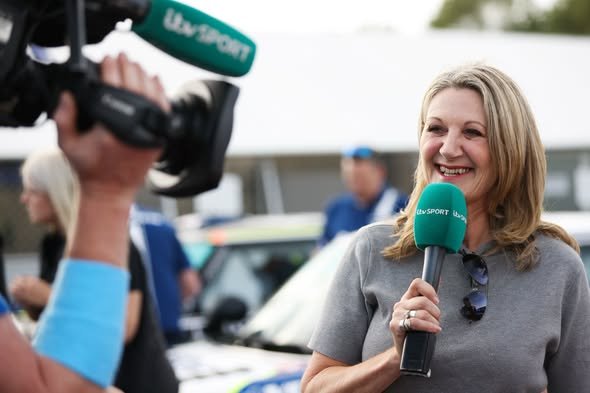
Martin Brundle’s tribute to Louise Goodman marked the departure of a broadcaster who helped bring viewers closer to the people behind motorsport. The martin brundle louise goodman tribute followed her final ITV British Touring Car Championship weekend at Brands Hatch in October 2026, closing a television chapter that began with ITV’s Formula 1 coverage in 1997. His message celebrated her reporting career and her contribution to opportunities for women in the sport.
The strongest part of this story is the professional history behind that praise. Brundle knew Goodman before either became a familiar member of ITV’s F1 team—and their subsequent careers demonstrate why informed pit-lane reporting matters.
Instant Topic Verdict
- What happened: Goodman stepped down from ITV’s BTCC team, with Brundle among those paying tribute.
- Why it matters: Her career connected team communications, Formula 1 broadcasting and touring-car reporting.
- The defining record: ITV’s official farewell credited her with 12 seasons of F1 coverage, followed by an enduring BTCC presence.
- The journalistic verdict: Her greatest contribution was making access useful: obtaining interviews and explanations that helped viewers understand events.
- What comes next: Her departure from this role is confirmed; a future broadcasting appointment should not be assumed.
What Did Martin Brundle Say About Louise Goodman?
In the tribute reported by PlanetF1, Brundle recalled their time together at Jordan in 1996 and their subsequent move into ITV’s Formula 1 coverage. He praised her contribution to motorsport, particularly her support for younger people and women.
His message included a personal expression of appreciation:
“I’m really proud of you, and I hope we see you some more in Formula 1.”
That final line expresses a hope, rather than announcing an F1 return.
The distinction matters because farewell coverage can encourage speculation about the next broadcasting move. The available announcement establishes that Goodman is leaving her ITV BTCC position; it does not establish where viewers might see her next.
Why Their Jordan Connection Gives the Tribute Weight
Goodman’s relationship with Brundle predates their television partnership. She was his press officer at Jordan before they both entered ITV’s new F1 operation.
In a 2017 interview with Motorsport Broadcasting, Goodman described how uncomfortable that transition initially felt. Working for a team had given her a clearly defined place in the paddock; becoming a reporter meant learning to approach other teams while simultaneously mastering television.
That background helps explain the substance of Brundle’s tribute. He had seen her operate on both sides of an interview: first preparing a driver to speak, then asking questions on behalf of the audience.
Those roles require different loyalties. A team representative protects an organisation’s interests; a journalist must pursue information that serves viewers.
Goodman’s career illustrates how paddock knowledge can support that transition. Knowing how teams work helps a reporter identify the right person, recognise an incomplete explanation and understand when a seemingly minor development deserves attention.
The Reporting Analysis: Turning Access Into Answers
A broadcasting tribute does not need irrelevant lap-time comparisons to become analytical. The useful question is how Goodman’s reporting improved the audience’s understanding of racing.
Her own recollections provide a concrete example.
Discussing the 1997 Hungarian Grand Prix, Goodman recalled going to the Arrows garage and obtaining early information that Damon Hill’s race-winning opportunity was slipping away. She identified both access and anticipation as important to that reporting success.
The lesson is straightforward: knowing where the story will develop can be as important as reacting quickly once it has happened.
An effective pit-lane contribution should deliver three things:
- New information: Something viewers cannot establish from the television pictures alone.
- Clear attribution: An explanation of whether the information comes from a driver, team representative or the reporter’s observation.
- Competitive meaning: Why the development changes a driver’s prospects or the interpretation of the race.
Access creates an opportunity. The quality of the question determines whether that opportunity produces useful journalism.
Brazil 2008: Why Accurate Commentary and Pit-Lane Reporting Belong Together
The 2008 Brazilian Grand Prix provides a particularly revealing example of Goodman’s working relationship with the commentary team.
Lewis Hamilton needed at least fifth place to secure the championship if Felipe Massa won. His decisive late pass on Timo Glock delivered that finishing position in one of Formula 1’s most dramatic title conclusions.
In her retrospective interview, Goodman recalled hearing James Allen and Brundle correctly interpret the unfolding finish while people around her believed Hamilton had lost. She then pursued an immediate interview with the new champion amid the congestion and rain.
Looking closely at her account, the broadcasting challenge had two distinct parts:
- Interpretation: The commentary team needed to follow the changing race order accurately before declaring the championship outcome.
- Execution: The reporter needed to reach the central figure and obtain a meaningful reaction while the broadcast was still live.
That combination explains why a strong commentary box cannot do everything alone. Analysis establishes what happened; reporting adds the direct response and information needed to complete the story.
Goodman’s account also resists an easy romanticisation of older broadcasting. Less controlled access created opportunities, but it required reporters to make rapid decisions about positioning and pursuit.
Why the BTCC Chapter Deserves Equal Attention
Calling Goodman simply a former F1 reporter understates the significance of her touring-car work.
The BTCC’s official farewell describes almost two decades of involvement, highlighting her ability to handle grid reporting, first-win emotion and the aftermath of disputed collisions. Goodman herself said she had found a welcoming home in the paddock since 2007.
Caption: Louise Goodman interviews Jason Plato about life after racing, offering an example of her personal approach to motorsport reporting.
Touring-car reporting tests a particular skill: asking a direct question when the interviewee may still be processing contact, disappointment or victory.
A productive interview must separate the driver’s immediate account from the established facts. Warmth can encourage candour, but it should also create room for a precise follow-up.
Her farewell coincided with another milestone. Ash Sutton arrived at the October 10–11 Brands Hatch finale having already secured a record fifth BTCC drivers’ title at Silverstone on September 27. The championship achievement therefore preceded the final weekend.
That timing gave the finale two different kinds of legacy: a driver extending the championship’s competitive record and a broadcaster concluding a long relationship with its audience.
Fan Reaction: Nostalgia, but Also Recognition of a Specific Skill
In a Reddit discussion about Goodman’s departure, contributors remembered her ITV F1 interviews and praised her rapport with BTCC drivers. One recurring theme was how quickly she could secure reactions after a retirement or incident.
These comments represent a small, self-selected group rather than a measurement of the whole audience. Nevertheless, their specificity is revealing: viewers remembered what her reporting delivered.
The worthwhile debate is whether modern motorsport broadcasting gives enough space to that kind of work.
My view is that interview quality should carry more weight than familiarity alone. A recognisable broadcaster earns lasting value by obtaining answers that clarify the contest, challenge an account or reveal something viewers could not otherwise know.
Goodman’s career offers a useful standard against which to judge that work. The question is whether an interview leaves the audience better informed.
For another perspective on careers in sports television, read about: Micah Richards’ broadcasting career and future plans.
FAQ’s
Q1, Why did Martin Brundle pay tribute to Louise Goodman?
Brundle celebrated Goodman as she concluded her ITV BTCC role. His message recognised their shared history at Jordan and ITV, alongside her wider contribution to motorsport and opportunities for women.
Q2. How long did Louise Goodman work on ITV’s Formula 1 coverage?
Goodman covered 12 F1 seasons, from 1997 through 2008. Her final Grand Prix with ITV’s original F1 team was the 2008 Brazilian championship decider.
Q3. Is Louise Goodman returning to Formula 1?
The cited farewell reports do not confirm a new F1 role. Brundle said he hoped to see her in Formula 1 again, but that was a personal wish rather than a recruitment announcement.
Conclusion
Goodman’s ITV departure will make continuity a challenge for future BTCC coverage. My expectation is that viewers will judge whoever takes on comparable responsibilities by the quality of their questions and their ability to build trust under live pressure.
The lasting significance of Brundle’s tribute is that it recognises the work behind those moments. Motorsport needs reporters who understand the paddock well enough to gain access—and ask questions sharp enough to make that access count.
Related reading: Explore Formula 1’s changing sponsorship landscape.