

Rafael Jodar is a 20-year-old Spanish tennis player whose rise has taken him from US Open junior champion to the world’s top 15. His October ranking stands at No. 13, with a career high of No. 11, making him an increasingly significant name in men’s tennis. His breakthrough includes a first ATP title in Marrakech and a Roland Garros quarter-final, followed by further success on hard courts.
Instant Topic Verdict
- Ranking: No. 13 in the official Australian Open player profile updated on October 9, 2026.
- Latest verified milestone: His October 12 Shanghai victory brought his season’s tour-level record to 40–16.
- First ATP title: He won Marrakech in April 2026, beating Marco Trungelliti in the final.
- Background: The 2024 US Open boys’ champion also became the 2025 ITA National Rookie of the Year at Virginia.
Who Is Rafael Jodar?
Rafael Jodar, also written Rafael Jódar, is a Spanish player from Madrid. Born on September 17, 2006, he turned 20 in September 2026. The Australian Open’s official profile lists him at 191 centimetres, or approximately 6 feet 3 inches, and identifies him as right-handed.
His father, also named Rafael, coaches him. That small coaching setup has been a notable feature of his arrival on the main tour: the US Open’s official profile describes his father as frequently the only person in his coaching box.
What makes Jodar’s story distinctive is his route. Junior success led to American college tennis, followed by Challenger titles and then sustained results against established ATP opponents.
What Is Rafael Jodar’s Current Ranking?
Jodar is ranked world No. 13 in the October snapshot checked for this article. His career-best ranking is No. 11, reached on August 10, 2026, according to his ATP player activity page. Rankings change, so those figures should be read alongside their dates.
The speed of his progress is striking. He entered the top 100 in March 2026, broke into the top 50 three weeks later and reached the edge of the top 10 by August.
His ATP ranking and position in the Race to Turin are different measures. The ranking broadly reflects a rolling 52-week results period; the Race tracks the season’s results toward ATP Finals qualification. A strong Race position signals a productive year, but it does not by itself confirm qualification.
Latest Results: What His Shanghai Comeback Shows
On October 12, Jodar defeated Jiri Lehecka 4–6, 7–6(2), 6–4 to reach Shanghai’s fourth round. The official tournament report put his 2026 tour-level record at 40 wins and 16 losses after that match.
That translates to a win rate of approximately 71.4%, calculated from those 56 matches. For someone playing his first full ATP Tour season, the figure illustrates consistency across a substantial schedule.
The score also identifies the decisive passage: after losing the opening set, Jodar won the second-set tie-break seven points to two, then completed the comeback in the third. It supports a measured conclusion about his ability to recover under pressure, without requiring an invented tactical explanation.
Shanghai became the fifth consecutive Masters 1000 event he had played in which he reached at least the fourth round. The tournament identified him as the youngest man to achieve that sequence since Novak Djokovic in 2007. That comparison concerns a specific consistency milestone, rather than a prediction about his eventual career.
From US Open Junior Champion to Virginia Standout
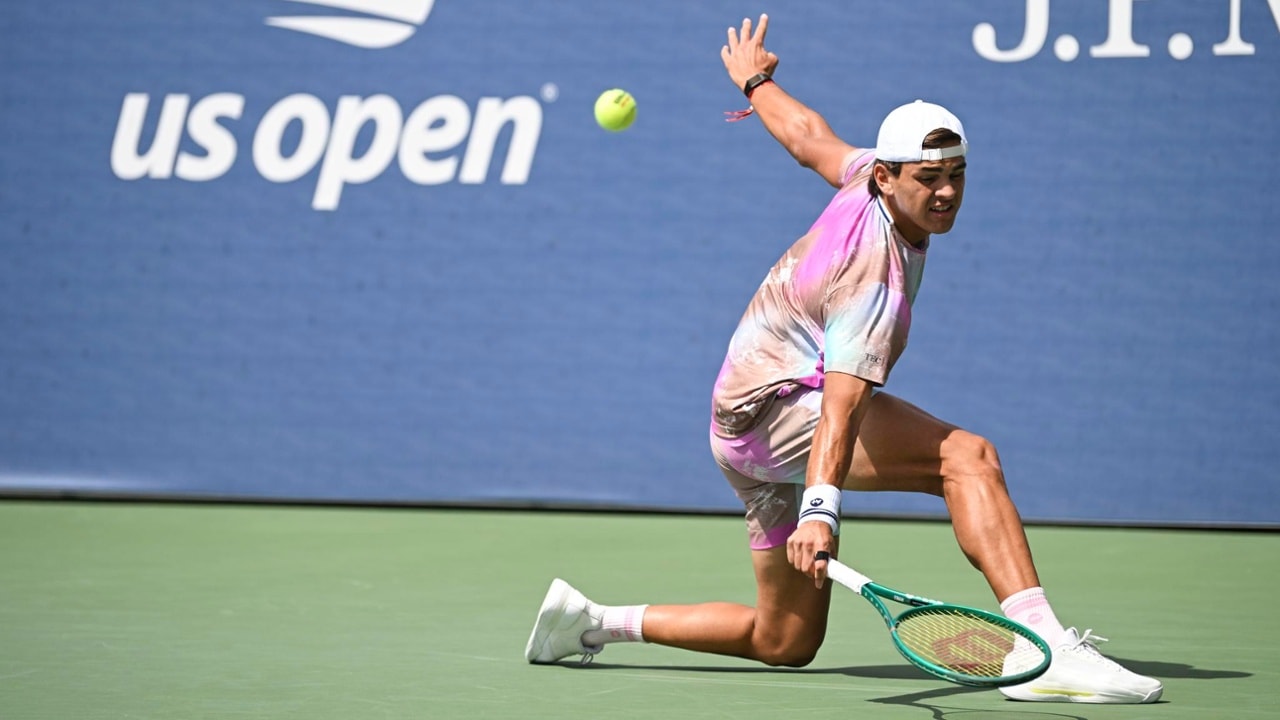
The junior title that established his name
Jodar won the 2024 US Open boys’ singles title, defeating top seed Nicolai Budkov Kjaer in the final. He was seeded 12th himself, making the victory a significant step in his junior career.
Junior Grand Slam success provides an early marker of ability. The harder test is whether a player can reproduce winning tennis against stronger, more experienced professionals.
Why his college record matters
After joining the University of Virginia team in January 2025, Jodar finished his freshman season with a 19–3 singles record and the No. 4 ITA singles ranking. He earned ITA National Rookie of the Year and All-American honours.
The detail beneath those awards is useful. He went 15–2 on the top singles court, where teams generally field their strongest player, and 8–0 in regular-season conference play. He also recorded four wins against opponents ranked inside the collegiate top 10.
Those results show he was regularly handling a demanding position in Virginia’s lineup. College rankings are separate from ATP rankings, but his record demonstrates that the university chapter involved meaningful competitive responsibility.
He subsequently won three Challenger titles in 2025 before turning professional full-time in December. The Challenger circuit sits below the main ATP Tour and offers an important transition into higher-level professional competition.
The Breakthrough Results Behind His Rise
Marrakech: his first ATP title
Jodar won his first ATP Tour title at Marrakech on April 5, 2026, defeating Marco Trungelliti 6–3, 6–2 in the final.
Winning a tournament changes the significance of a promising week. It requires a player to negotiate successive opponents and then deliver with a trophy at stake.
Roland Garros: success over five sets
His clay-court progress continued with quarter-finals in Madrid, Rome and Roland Garros. In Paris, reaching the last eight also demonstrated that his results could translate to the longer best-of-five-set format used in men’s Grand Slam singles.
One demanding test came against Alex Michelsen in the third round. Jodar recovered from two sets to one down to win 7–6(2), 6–7(5), 4–6, 6–3, 6–3. That result provides concrete evidence of his capacity to remain competitive deep into a long match.
Hard courts: evidence of broader potential
Jodar later reached the Washington final and the Montreal semi-finals. Those runs matter because they broaden the evidence beyond his productive clay season: his progress has carried into major hard-court events as well.
Playing Style: How Does Rafael Jodar Win?

Jodar describes himself as an attacking player, while the US Open’s official assessment highlights his movement out of the corners and willingness to accelerate rallies. Together, those descriptions suggest a player who seeks opportunities to take control rather than relying solely on opponents’ mistakes.
From an analytical perspective, that approach places importance on three connected skills:
- Serve quality: creating an advantageous position for the next shot.
- Recovery movement: regaining court position after being pulled wide.
- Shot selection: recognising when an attacking opportunity is strong enough to justify the risk.
These are principles for understanding his game, rather than match-tracking findings. Height alone does not establish serving dominance, and a comeback score cannot reveal every adjustment a player made.
The most persuasive evidence currently comes from his results across surfaces and competition levels. They suggest his attacking game can function in different environments, while leaving room to improve its consistency against the very best opponents.
Conclusion
Jodar’s rise is supported by a sequence of achievements: junior success, an outstanding college season, Challenger titles and increasingly deep ATP runs.
The next meaningful questions concern repeatability. Can he sustain top-15 results, turn more deep runs into titles and establish himself inside the top 10? Those are reasonable benchmarks to follow; another ranking jump or a major title remains an outcome to earn.