
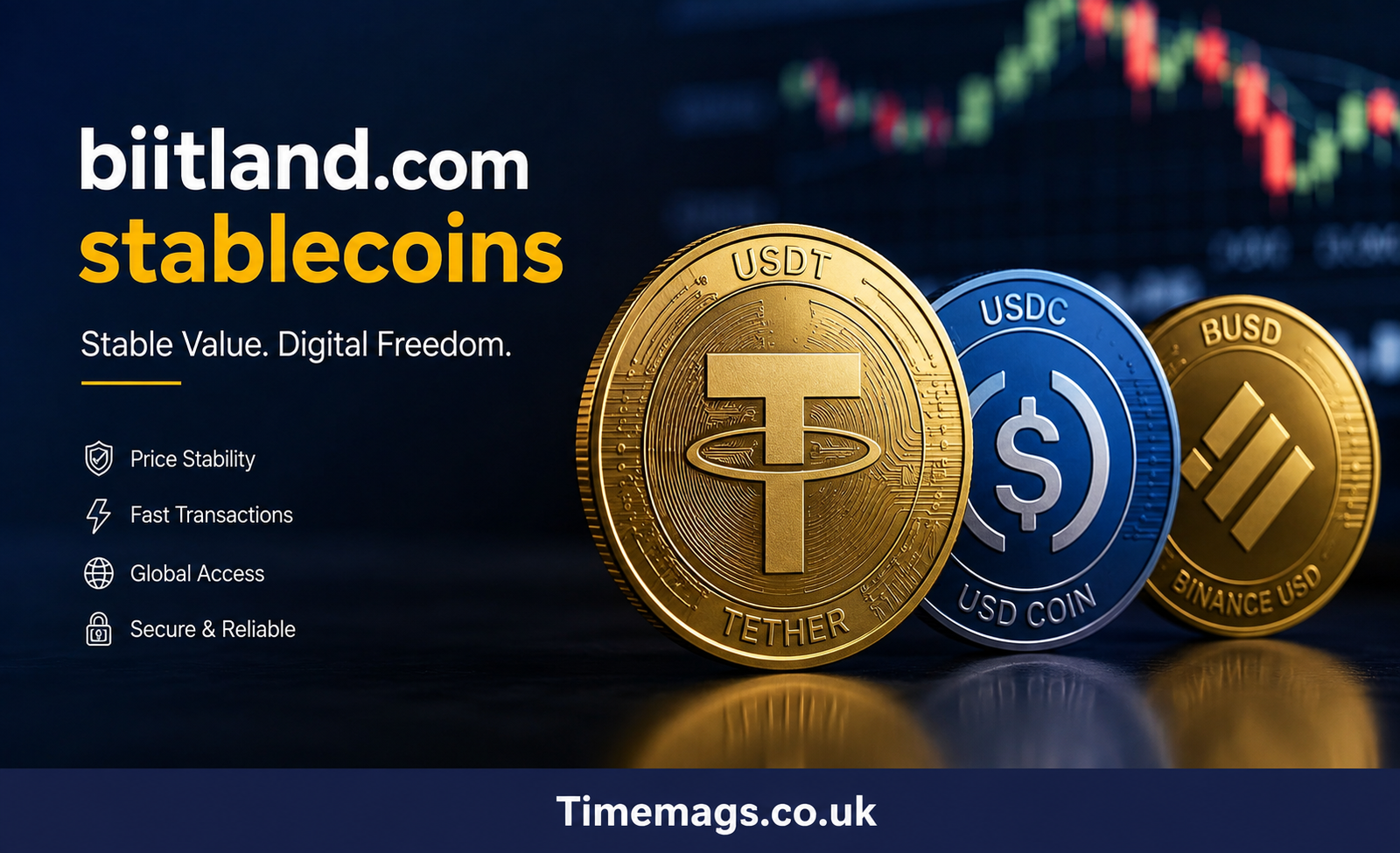
Cryptocurrency is known for fast transactions and global access. However, major cryptocurrencies such as Bitcoin and Ethereum can change in value quickly. This makes them less practical for everyday payments and short-term savings.
Stablecoins were created to address this problem. They aim to maintain a more consistent value, usually by being linked to an asset such as the US dollar. This guide explains how stablecoins work, the main types, and what to check before using a platform or service related to Biitland.com stablecoins.
What Are Stablecoins?
A stablecoin is a cryptocurrency designed to maintain a relatively stable price.
Most stablecoins use a peg. For example, a dollar-pegged stablecoin aims to stay close to $1. Instead of depending mainly on market demand like Bitcoin, its value is supported by reserves, collateral, or a specific stabilization mechanism.
Stablecoins can be useful for:
- Sending money across borders
- Moving funds between crypto platforms
- Making digital payments
- Holding value during crypto market volatility
- Using certain DeFi applications
However, stablecoins can still lose their peg. Stability should never be confused with a complete lack of risk.
How Do Stablecoins Work?
Stablecoins use different methods to maintain their value. The method depends on the type of stablecoin.
For example, a fiat-backed stablecoin may hold cash or short-term assets as reserves. If the coin is designed to represent one US dollar, the issuer aims to maintain enough backing to support that value.
Other stablecoins use cryptocurrency as collateral or rely on automated smart-contract systems.
Therefore, when evaluating a stablecoin, the most important question is simple:
What actually supports its value?
Biitland.com Stablecoins: What to Understand
Information about Biitland.com stablecoins can be viewed as part of the wider stablecoin discussion. The key topics include digital payments, transaction speed, accessibility, and stable-value cryptocurrencies.
However, readers should separate educational information from financial verification.
A website discussing stablecoins does not automatically mean that it operates a regulated stablecoin, holds customer funds, or provides audited reserves. Before using any platform, verify its ownership, services, reserve information, terms, and regulatory position independently.
Main Types of Stablecoins
Stablecoins generally fall into four major categories:
| Type | How It Works | Common Backing | Main Risk |
|---|---|---|---|
| Fiat-Backed | Reserves support the token’s value | USD, EUR, GBP | Issuer and reserve risk |
| Commodity-Backed | Linked to physical commodities | Gold or silver | Custody and market risk |
| Crypto-Backed | Uses other cryptocurrencies as collateral | ETH or other crypto assets | Collateral can fall sharply |
| Algorithmic | Uses programmed mechanisms to manage supply | Usually no traditional reserves | High de-pegging risk |
Fiat-Backed Stablecoins
These are among the easiest stablecoins to understand. The issuer holds reserve assets intended to support the tokens in circulation.
The main concern is transparency. Users need confidence that the stated reserves actually exist and can support redemption.
Commodity-Backed Stablecoins
These connect digital tokens with assets such as gold. They may appeal to users who want exposure to a commodity through a blockchain-based asset.
However, storage, custody, verification, and redemption can create additional risks.
Crypto-Backed Stablecoins
These use cryptocurrency as collateral. Because crypto prices can move quickly, these systems often require more collateral than the value of the stablecoins issued.
The benefit is greater integration with decentralized finance. The downside is greater complexity and market exposure.
Algorithmic Stablecoins
Algorithmic systems attempt to maintain stability through software, smart contracts, and supply adjustments.
They can be innovative, but they can also be difficult to understand and vulnerable during extreme market conditions. This makes them one of the higher-risk stablecoin categories.
What Should You Check Before Using a Stablecoin?
Before sending money to a stablecoin platform, check a few basic things.
1. Reserve Information
Find out what supports the stablecoin. Look for clear reserve disclosures and independent verification where available.
2. Redemption Process
Understand how you can convert the stablecoin back into fiat or another cryptocurrency. Check fees, limits, and processing times.
3. Liquidity
A stablecoin should have enough market liquidity for users to buy and sell it efficiently. Low liquidity can become a serious problem during market stress.
4. Regulation
Check which company operates the service and where it is registered. Regulatory requirements differ between countries.
5. Security
Look for information about wallet security, account protection, smart-contract risks, and previous security incidents.
6. Start Small
If you are trying an unfamiliar platform, avoid committing a large amount immediately. A small test transaction can help you understand how deposits, transfers, and withdrawals work.
Are Stablecoins Completely Safe?
No.
Stablecoins can reduce price volatility, but they still carry risks. A coin can lose its peg because of weak reserves, liquidity problems, market panic, technical failures, or issues with the issuer.
The safest approach is to understand how the stablecoin maintains its value before using it.
FAQ’s
Q1. What is a stablecoin?
A stablecoin is a cryptocurrency designed to maintain a relatively stable value, often by being linked to a fiat currency such as the US dollar.
Q2. Are stablecoins the same as Bitcoin?
No. Bitcoin has a market-driven price that can change significantly. Stablecoins are designed to reduce these price movements.
Q3. Can a stablecoin lose its value?
Yes. Stablecoins can lose their peg, especially when reserves, liquidity, technology, or market confidence become a problem.
Q4. What should I check before using Biitland.com stablecoins?
Check the platform’s ownership, reserve information, redemption process, security practices, fees, and applicable regulatory status before depositing money.
Conclusion
Stablecoins provide a practical way to use blockchain technology without taking the same level of price volatility associated with many cryptocurrencies.
The key difference between stablecoins is how they maintain their value. Some use fiat reserves, while others rely on commodities, cryptocurrency collateral, or algorithms.
If you are researching Biitland.com stablecoins, focus on verifiable information rather than promotional claims. Check the backing, liquidity, security, redemption process, and regulatory position before using any service.