
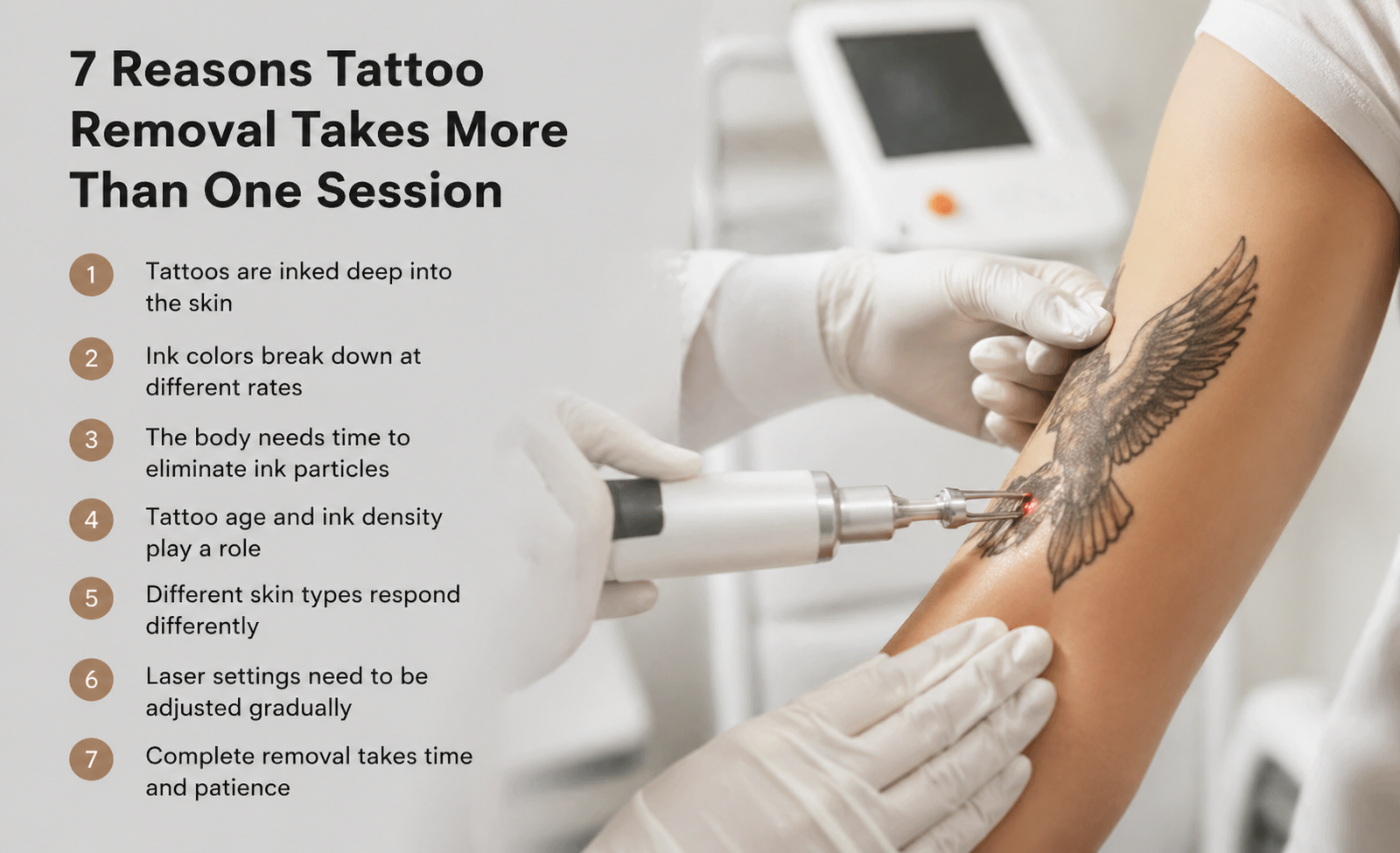
So you’ve decided that tattoo you got years ago no longer fits your life, and you’re ready to have it removed. You’ve probably heard that laser tattoo removal is the most effective method available today, but you might be surprised to learn that a single session won’t do the trick. Understanding why multiple sessions are necessary can help you set realistic expectations and commit to the full removal process.
Your Skin Needs Time to Heal Between Treatments
Laser tattoo removal works by breaking down ink particles in your skin, but this process creates a controlled injury that requires proper healing time. Your body needs several weeks between sessions to repair the treated area and flush out the fragmented ink particles through your lymphatic system.
Most professionals recommend waiting at least six to eight weeks between treatments, though some practitioners suggest even longer intervals. Rushing the process by scheduling sessions too close together won’t speed up removal and can actually increase your risk of scarring or other complications. Patience truly is a virtue when it comes to tattoo removal.
Ink Particles Break Down Gradually, Not All at Once
When laser energy hits your tattoo, it shatters the ink particles into smaller fragments. However, not all particles break down during a single treatment. The laser can only affect particles of certain sizes during each session, which means multiple passes are needed to progressively reduce all the ink in your tattoo.
Think of it like breaking down a boulder into pebbles, then into sand, and finally into dust. Each session targets progressively smaller particles until they’re small enough for your immune system to eliminate completely. This gradual breakdown is why you’ll notice your tattoo fading over time rather than disappearing immediately.
Different Colors Require Different Laser Wavelengths
If your tattoo contains multiple colors, the removal process becomes even more complex. Different ink colors absorb different wavelengths of light, which means your practitioner may need to use various laser settings or even different laser types throughout your treatment plan.
Black and dark blue inks typically respond best to laser treatment and may require fewer sessions. Lighter colors like yellow, green, and fluorescent shades are notoriously stubborn and often need additional treatments. When seeking tattoo removal services San Diego residents should ask about the specific technology available for treating multi-colored tattoos.
Tattoo Depth and Ink Density Matter Significantly
Not all tattoos are created equal. Professional tattoos typically use more ink and penetrate deeper into the skin compared to amateur tattoos. The amount of ink and how deeply it was deposited directly impacts how many removal sessions you’ll need.
A small, amateur stick-and-poke tattoo might fade significantly after just a few sessions, while a large, professionally done piece with heavy ink saturation could require ten or more treatments. The density of the ink means there’s simply more material for your body to break down and eliminate over time.
Your Body’s Immune System Does the Heavy Lifting
The laser doesn’t actually remove your tattoo; it just breaks down the ink so your immune system can do the rest. Your lymphatic system and white blood cells work to carry away the fragmented ink particles, but this biological process takes time and varies from person to person.
Factors like your age, overall health, circulation, and immune function all influence how quickly your body can eliminate tattoo ink. Someone with excellent circulation and a robust immune system might see faster results than someone with health conditions that affect their body’s ability to flush out the broken-down particles.
Location on Your Body Affects Removal Speed
Where your tattoo is located on your body plays a surprising role in how many sessions you’ll need. Tattoos on areas with better circulation, like your chest or upper arms, typically fade faster than tattoos on your extremities.
Tattoos on your hands, feet, and ankles are the slowest to remove because these areas have less blood flow and are farther from your heart. The reduced circulation means your body takes longer to carry away the fragmented ink particles, extending the overall treatment timeline.
Setting Realistic Expectations for Your Journey
Understanding that tattoo removal is a marathon, not a sprint, helps you approach the process with the right mindset. Most people need between six and twelve sessions for complete removal, though some tattoos may require more or fewer treatments depending on the factors we’ve discussed.
Working with an experienced practitioner who can assess your specific tattoo and create a customized treatment plan is essential. While the multi-session requirement might seem daunting, each treatment brings you one step closer to the clean slate you’re seeking. With patience and commitment to the full process, you can successfully remove that unwanted ink and move forward with confidence.