It was a night that would go down in music history. August 21, 2000, saw one of the most iconic performances by the legendary British rock band Oasis at Wembley Stadium. A record-breaking 125,000 fans packed the arena across two nights, creating an electric atmosphere that still resonates in the annals of rock music. For anyone who has ever felt the raw energy of a live performance, the Oasis Wembley concert is often described as the pinnacle of Britpop glory.


A Moment Decades in the Making
Oasis, formed in Manchester in 1991 by brothers Noel and Liam Gallagher, had risen from local pubs to dominate the UK music scene by the mid-1990s. With their third studio album, Be Here Now, Oasis had already cemented themselves as cultural icons. But it was Wembley, the home of football champions, that would see them claim their place in music legend. The stadium, traditionally associated with sporting triumphs, was transformed into a shrine for Britpop enthusiasts, drawing fans from across the UK and around the globe.
The two nights at Wembley were not just concerts; they were events. Tickets sold out in record time, and fans queued for hours, braving unpredictable British weather to witness a performance that promised to define a generation. For many, it wasn’t just about the music; it was about being part of something bigger a shared experience that connected 125,000 people through the universal language of rock.
Setting the Stage: An Arena Transformed
Wembley Stadium, with its vast open-air expanse and historic significance, provided the perfect backdrop. The stage was monumental, equipped with cutting-edge lighting and sound systems that ensured every guitar riff and vocal line would resonate through the stadium. Fans could see every detail of the band’s performance, from Liam’s raw, emotive vocals to Noel’s intricate guitar work. The production design reflected Oasis’ larger-than-life persona, blending grandeur with the raw edge that had always defined their music.
Every inch of the stadium pulsed with anticipation. Giant screens flanked the stage, projecting live footage of the band, ensuring that even those at the farthest reaches of the stadium could feel connected to the performance. The buzz was palpable; merchandise stalls sold out in minutes, and fans proudly donned Oasis T-shirts, waving banners and flags that added a sea of color to the night.
The Setlist That Defined an Era
Oasis’ setlist for the Wembley nights was a carefully curated journey through their greatest hits, designed to deliver maximum emotional impact. Classics like Wonderwall, Don’t Look Back in Anger, and Champagne Supernova dominated the night, each song met with deafening cheers. But the band didn’t just play their hits they crafted a narrative, a musical story that celebrated their journey and the connection with their fans.
Every song felt like a communal experience. As Liam’s voice echoed over the stadium, fans sang along, creating a chorus of tens of thousands that rivaled the band’s own sound. Noel’s guitar solos soared over the crowd, blending perfectly with the rhythmic drumming and bass lines that formed the backbone of Oasis’ signature sound. By the end of the night, it was clear that this wasn’t just a concert; it was a cultural milestone.
Behind the Scenes: The Gallaghers’ Dynamic
The magic of Oasis was not just in their music but in the dynamic between the Gallagher brothers. Known for their fiery relationship, Noel and Liam brought an intensity to the stage that was palpable. Their interplay sometimes playful, sometimes confrontational added a layer of drama to the performance, keeping fans on edge and fully engaged. It was a reminder that Oasis was as much about personality as it was about melody, and Wembley provided the perfect arena for their larger-than-life characters to shine.
Backstage, the preparation was meticulous. Soundchecks were conducted with military precision, lighting cues were timed to perfection, and every detail was scrutinized. Yet, despite the technical complexity, the band managed to maintain a raw, unfiltered energy that felt spontaneous and alive. That balance between precision and chaos is part of what made Oasis’ Wembley nights so unforgettable.
The Fans: Heart of the Experience
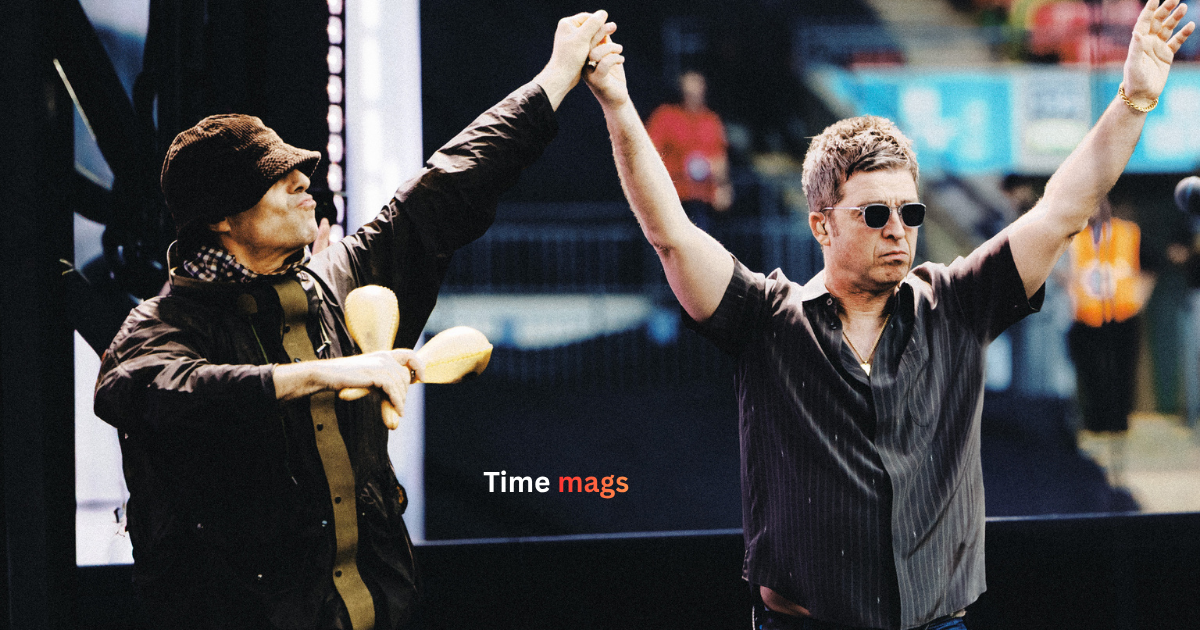
Of course, a concert of this magnitude would mean nothing without the fans. 125,000 people brought their energy, their voices, and their passion, turning the stadium into a living organism. From teenagers experiencing their first live concert to older fans who had followed the band since their early days in Manchester, the audience represented the diversity and breadth of Oasis’ appeal. Everyone had a story, a connection to the songs, and Wembley provided the space for that collective experience to unfold.
Fans have often recounted the euphoria of the nights the goosebumps when the opening chords of Live Forever rang out, the tears shed during Wonderwall, the uncontainable joy of singing Champagne Supernova alongside tens of thousands of strangers who felt like friends. It was a night where individual experiences merged into a singular, unforgettable memory.
Cultural Impact: More Than Just a Concert
The impact of the Oasis Wembley concerts went far beyond the music. These performances marked a peak in the Britpop movement, a time when British bands were defining global culture with their style, attitude, and sound. The concerts solidified Oasis’ reputation not just as musicians but as cultural icons who could command one of the world’s most famous arenas with ease.
Music critics hailed the event as a defining moment, praising the band’s ability to connect with their audience on such an immense scale. Media coverage captured the spectacle, ensuring that even those who couldn’t attend felt part of the phenomenon. The Wembley nights became a benchmark for live performances, a standard against which other concerts would inevitably be measured.
Legacy: Echoes of Wembley
Even decades later, the memory of Oasis at Wembley continues to resonate. Recordings, both official and fan-made, circulate widely, capturing moments that have become part of rock mythology. New generations of music lovers discover Oasis through these legendary performances, understanding why the Gallagher brothers and their band left an indelible mark on British music.
For fans who were there, the nights at Wembley are often described as life-changing a shared experience that transcended music and entered the realm of cultural history. The energy, the excitement, and the raw power of the performance remain etched in memory, a testament to the enduring legacy of Oasis and their ability to unite people through the universal language of rock.
Conclusion
The Oasis Wembley concerts were more than just a pair of performances they were a celebration of music, culture, and community. With 125,000 fans singing in unison, the Gallagher brothers and their band created a moment that would stand the test of time. It was a night when music didn’t just entertain; it connected, inspired, and elevated thousands of people simultaneously. For anyone who witnessed it, whether in person or through recordings, the magic of Wembley remains undeniable. It was a night when Oasis didn’t just play music they made history.