
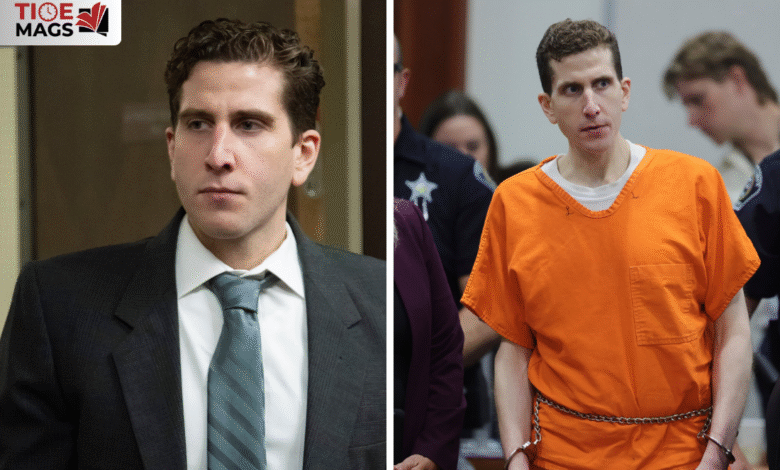
The name Bryan Kohberger became internationally recognised following one of the most chilling murder cases in recent American history the Idaho college killings. In a story that captivated media and shocked communities, four university students were found brutally murdered in their home in Moscow, Idaho, in November 2022. Within weeks, the case turned toward Kohberger, a criminology PhD student who appeared an unlikely suspect to those who knew him.
As more details emerged, public interest in his background, motivations, and the investigation only grew. This article explores the life of Bryan Kohberger, his arrest, the criminal case, and what is currently known as the legal process unfolds.
Who is Bryan Kohberger?
Before becoming the central figure in the Idaho murders, Bryan Kohberger was known in academic circles. Born in Pennsylvania in 1994, he grew up in Albrightsville and was described as intelligent, though socially awkward. He battled personal issues during his teenage years, reportedly struggling with drug addiction, weight issues, and social isolation.
Kohberger eventually found focus in academia, earning a master’s degree in criminal justice from DeSales University. He later enrolled as a PhD student in criminology at Washington State University, located less than 10 miles from the murder scene.
The Idaho Murders: What Happened?
In the early hours of 13 November 2022, four University of Idaho students Kaylee Goncalves, Madison Mogen, Ethan Chapin, and Xana Kernodle were stabbed to death in their off-campus home. The crime scene was described by investigators as one of the most gruesome they had ever witnessed.
Despite the brutality, two surviving housemates slept through the attack, awakening to the horrifying scene later that morning. The lack of forced entry and the targeted nature of the killings led investigators to believe it was a calculated crime.
The Investigation and Turning Point
The investigation initially yielded few public leads, but behind the scenes, law enforcement agencies, including the FBI, built a complex case. A white Hyundai Elantra, surveillance footage, mobile phone pings, and a leftover knife sheath at the scene were among the crucial pieces of evidence.
DNA found on the sheath, reportedly matching Kohberger via familial genealogy, became the linchpin of the investigation. Authorities linked mobile data showing Kohberger’s phone near the residence multiple times prior to the night of the murders.
By December 2022, law enforcement had a suspect.
Arrest of Bryan Kohberger
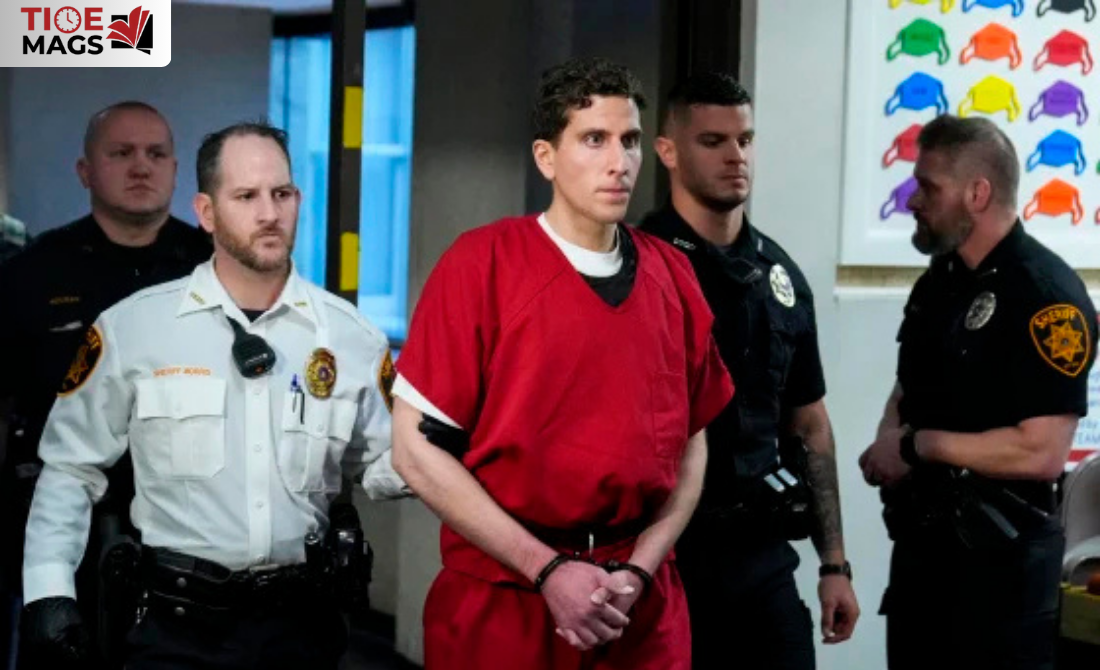
On 30 December 2022, Bryan Kohberger was arrested at his parents’ home in Pennsylvania during a pre-dawn raid. The arrest shocked many. Neighbours described him as quiet, intelligent, and deeply interested in criminology. To the wider public, it seemed like the real-life manifestation of someone who had studied crime so intently that he may have committed one.
Kohberger waived extradition and was transferred back to Idaho in early January 2023, where he was charged with four counts of first-degree murder and one count of felony burglary.
Academic Curiosity or Sinister Obsession?
One of the most disturbing elements of the case is Kohberger’s academic background. He had a fascination with the minds of criminals, often engaging in class discussions about serial killers and criminal intent. Reports surfaced that he had posted online surveys asking ex-convicts about their thought processes before, during, and after committing crimes.
These revelations led many to speculate whether the murders were a twisted psychological experiment or a manifestation of a long-harboured obsession.
His professors described him as brilliant but distant, while classmates recalled feeling unsettled by some of his comments in criminology discussions.
The Legal Proceedings So Far
As of early 2026, Bryan Kohberger has yet to stand trial, though a preliminary hearing revealed a wealth of circumstantial and forensic evidence. His defence has pushed back against the admissibility of certain DNA techniques used to identify him, questioning the integrity of genetic genealogy tracing.
His lawyers have also hinted at potential procedural missteps, aiming to create reasonable doubt. The trial has been delayed multiple times due to legal motions, including the defence’s request to move the trial out of Latah County due to pre-trial publicity.
While Kohberger maintains his innocence, he has not yet entered a formal plea in court.
Public Reaction and Media Frenzy
The media coverage surrounding Bryan Kohberger has been intense, fuelled by true crime interest and the brutal nature of the murders. Online forums, social media platforms, and news outlets have dissected his personal history, academic work, and court appearances.
At the same time, the families of the victims have asked for dignity and privacy. Tributes, candlelight vigils, and student-led memorials across the U.S. have kept the victims’ memories alive, even as the legal saga drags on.
Psychological Profile: What Experts Say
Criminal psychologists analysing Kohberger’s case have pointed out behavioural traits that could indicate psychopathy or narcissistic tendencies. The methodical nature of the killings, use of gloves, the suspected premeditation, and his composed courtroom demeanour have raised red flags.
However, without formal evaluations released to the public, much of this remains speculative. Experts agree that if convicted, his case could become a landmark study in criminology for decades to come.
The Role of Forensic Technology
The use of advanced forensic methods has been central to the case. Notably, the deployment of genetic genealogy the same technique used to catch the Golden State Killer helped authorities trace DNA left on the knife sheath.
Investigators also utilised mobile tower data, surveillance camera timelines, and vehicle tracking to build a circumstantial map of Kohberger’s movements before and after the murders.
This multi-layered forensic approach represents a new era of criminal investigations, where data and DNA often speak louder than eyewitness accounts.
Arrest and Charges Explained

Bryan Kohberger was arrested on 30 December 2022 at his parents’ home in Pennsylvania, following an intense investigation linking him to the Idaho student murders. He was swiftly extradited to Idaho and formally charged with four counts of first-degree murder and one count of felony burglary. Authorities built their case using DNA evidence, mobile data, and surveillance footage. Kohberger has not entered a formal plea and remains in custody awaiting trial.
What Happens Next?
The legal proceedings are expected to continue into late 2026, barring additional delays. The court must rule on key motions regarding evidence admissibility and jury selection.
If convicted, Bryan Kohberger could face the death penalty under Idaho law. However, the defence is likely to pursue every legal avenue to avoid this outcome, including a possible plea deal or appeals on constitutional grounds.
Conclusion
The Bryan Kohberger case stands at the intersection of criminology, modern forensic science, and public fascination with true crime. It is a harrowing reminder that beneath the veneer of academic ambition, darker currents can sometimes flow undetected.
As the trial looms, the world watches closely not just for the verdict, but for understanding. Why would someone so immersed in studying crime become the alleged perpetrator of one?
